Showing posts with label how-to's. Show all posts

Saturday, May 25, 2013

How to Deep Clean a Nasty Area Rug

Ever had an area rug in a high-traffic area that just got really icky nasty dirty? Yeah, me too. Vacuuming obviously had no effect to being dingy and dirty and stinky... I even got a steam cleaner, and while that helped, it was only better in relation to how bad it had been... it was by no means even close to clean.

 Clearly, I had to get drastic. Luckily, I knew what I had to do, and I shall share the plan of attack - and my results - with you. It really, honestly looks like a whole new rug, except for one little section that is still slightly greyish, but only slightly. (And if I would get down on my hands and knees and really attack it with a brush, I could probably get it all sparkling again, but I decided I'd rather live with a slight grey patch rather than the pain should I kneel and bend over for that long...)

Materials Needed

  • 1 nasty, dirty rug
  • garden hose with pressure nozzle (I have a great one I got at Home Depot for about $7, that has about ten different settings, including a pressure jet)
  • clean area outside large enough for your rug (I pressure-hose cleaned out our open garage)
  • 1-3 Tbs laundry detergent
  • 1-3 Tbs washing soda (like baking soda, but stronger)
  • 1/3-1 tsp dishwashing liquid (Dawn, etc.)
  • 1/2-1 gallon container, preferably one that can be made to only pour a small amount at a time (I used a 1-gallon pitcher with the lid set to only expose only a single slit of the ice setting; a watering can with sprinkle head would work beautifully as well)
  • stiff bristled broom or scrub brush (optional, helps if you have really nasty spots) 
  • equipment to dry the rug in some manner (hanging, vacuum suction, etc.)

Cleaning the Rug

Step One

Take the rug outside, obviously.  Lay it out upside down.  (This is important, as it allows you to get the dirt that's compacted over the years at the bottom of the rug/fibers to get washed away.) 
Get your hose and wet it down thoroughly, then go over it slowly with the pressure nozzle, trying to cover every inch of it.  I found it helpful to slowly work the stream back and forth in about six inch waves, each moving up about the width of the stream of water across the rug, paying extra attention to visibly nasty spots.  Did I mention you should do this slowly?  You really want to pound the daylights out of every bit of it, this is mostly what gets the dirt out, and you want to get as much of it out as you can before adding the cleaners, so that they can be more effective.  It would take me two or three seconds to make each six inch pass.

Step Two

Mix the laundry detergent, washing soda, and dishwashing liquid in the container, and top off with hot water.  Scale the amount you use depending on size and general nastiness of your rug.
Distribute evenly over your rug.  I found it easiest to accomplish this by pouring a thin stream, then shaking the pitcher back and forth to make it 'sprinkle'. 

Step Three

Go inside and get something cold to drink.  No, seriously, this is a long process and you'll need the hydration!  Also, you should let it soak for at least 15 minutes, or up to about an hour, before continuing.

Step Four

Repeat the pressure washing procedure from step one.  Try to hit every single fiber for a second or two at least. 

Step Five

Flip your rug over (this sounds much easier than it is, you will swear it has been transmuted from yarn to lead).  It will look much nastier than it did before you started.  Don't panic!  This is normal.  It means your deep cleaning is working and all the nasty that was compacted at the base of the fibers has released.
Repeat the pressure washing procedure again (yes, again).  This is when you will see the drastic, dramatic change!
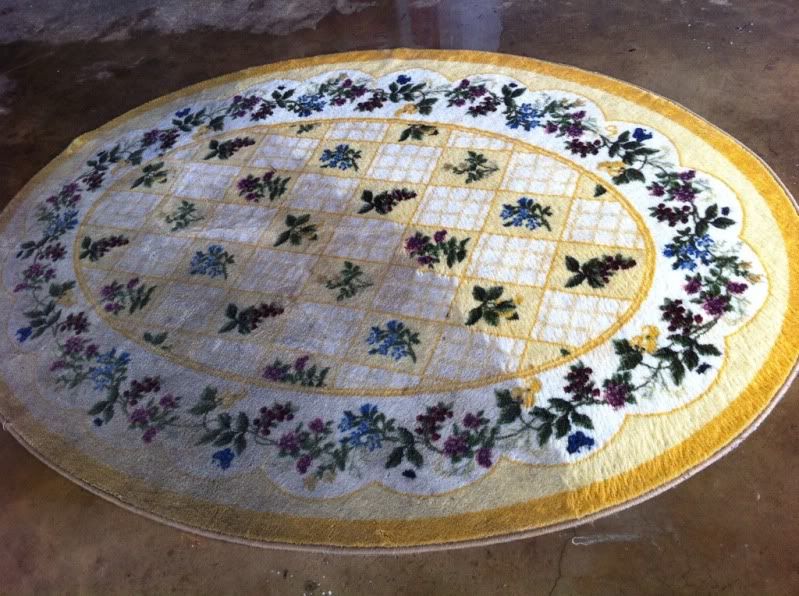

If your rug is really nasty, or has stubborn spots like mine, you may need to repeat steps two to five on the front side.  Use a stiff bristled broom or scrub brush on really stubborn stains after applying the cleaning solution.
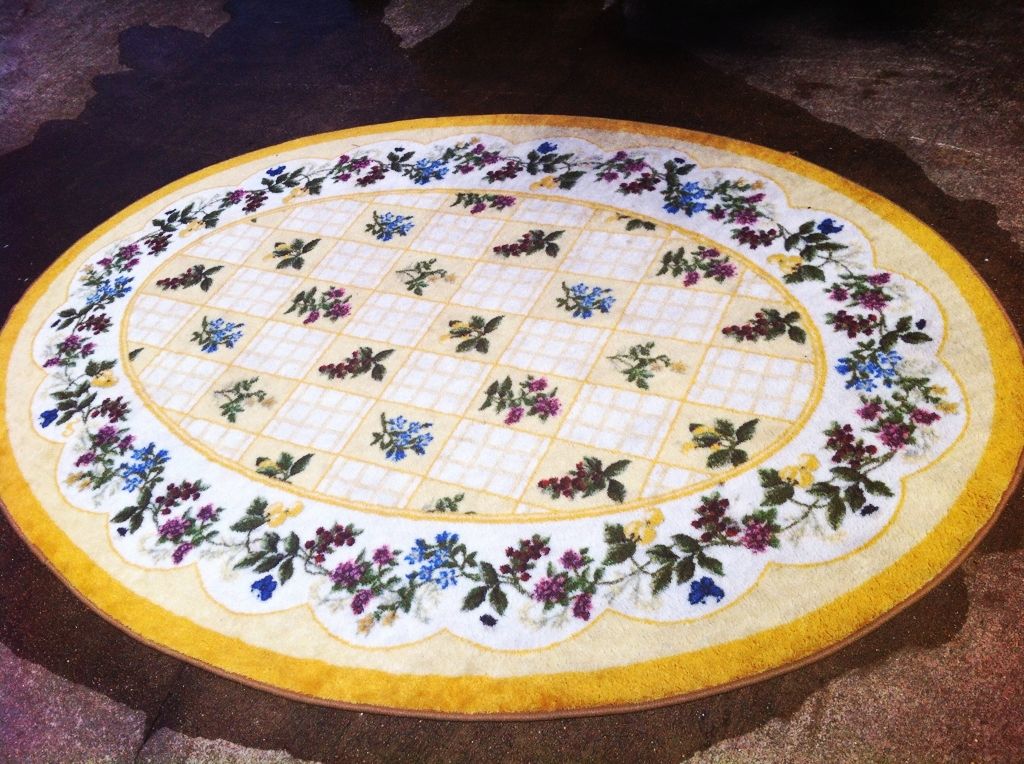
You can see the still-dingy section on the top side in this image, that I went back and cleaned a second time.

Step Six

Dry your rug.  This is not as simple as laying it out in the sun!  All that will accomplish is a soured and possibly moldy rug – there is simply too much water soaked into the fibers.  I made that mistake and ended up having to re-wash the rug; after a day and a half, I lifted it off the ground, and water was still pouring out, literally.
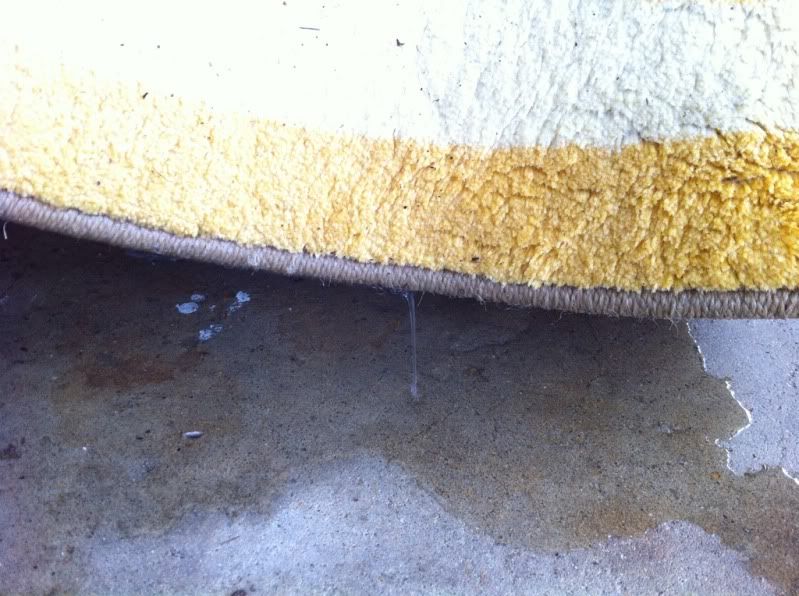


I had a steam cleaner at hand, and after a second, de-souring wash, I used it to suction up as much water as possible with 3-4 passes from different directions, then draped it over a cooler and outside table in the sun to finish drying.
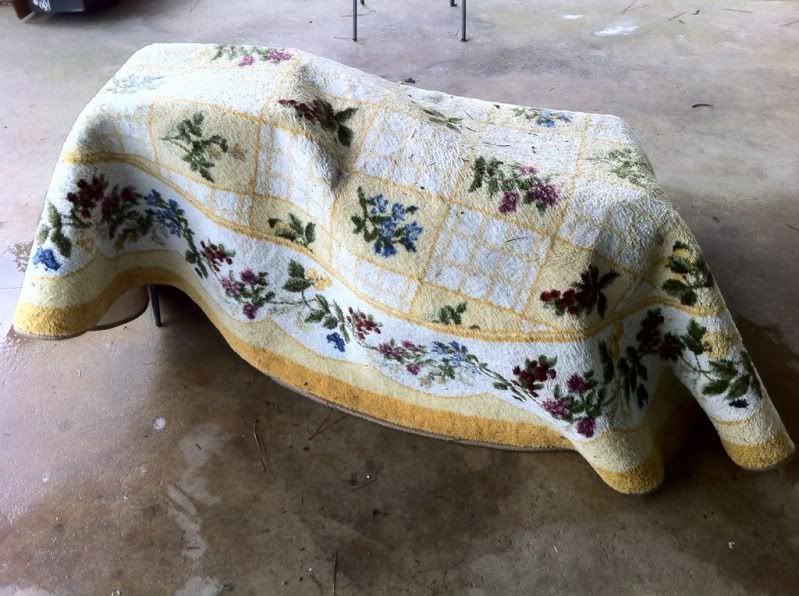

After that, within about twelve hours it was still damp, but dry enough that we brought it inside and put a fan on it to finish drying, as it was no worse than after steam cleaning.

Enjoy your rug's second life!
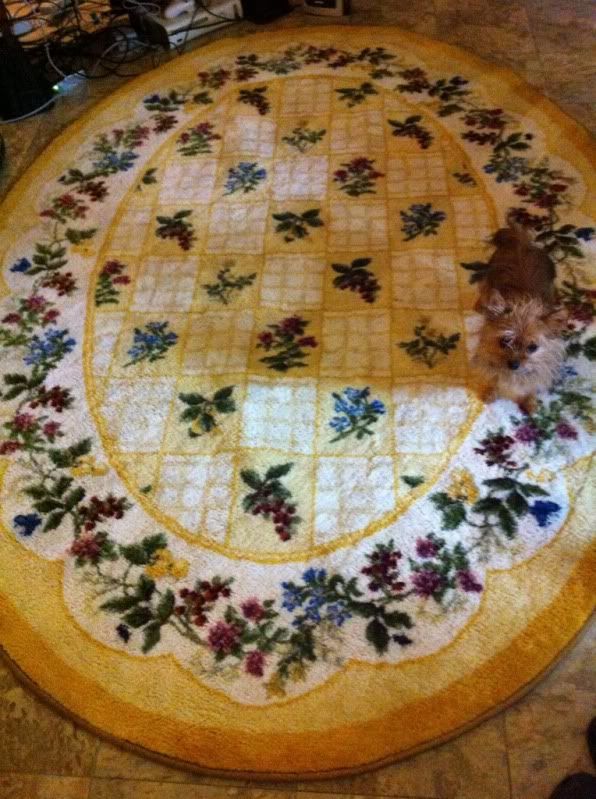

Our Yorkie-Pom, Nyxie, was quite confused by the newly cleaned carpet that no longer smelled 'right'!

Thursday, January 10, 2013

Single Serving Ointment Tubes

This is a fabulous idea that I wish I could take credit for.  It's a bit different than most of my how to's, but it's such a good idea with so many applications, and easily done inside of five minutes, that I felt I had to share it.  I literally went around my house and had everything I needed within about two minutes.

Because this was spur-of-the-moment, I only had a red straw.  It would have been significantly easier if it had been a plain clear straw.


Materials:

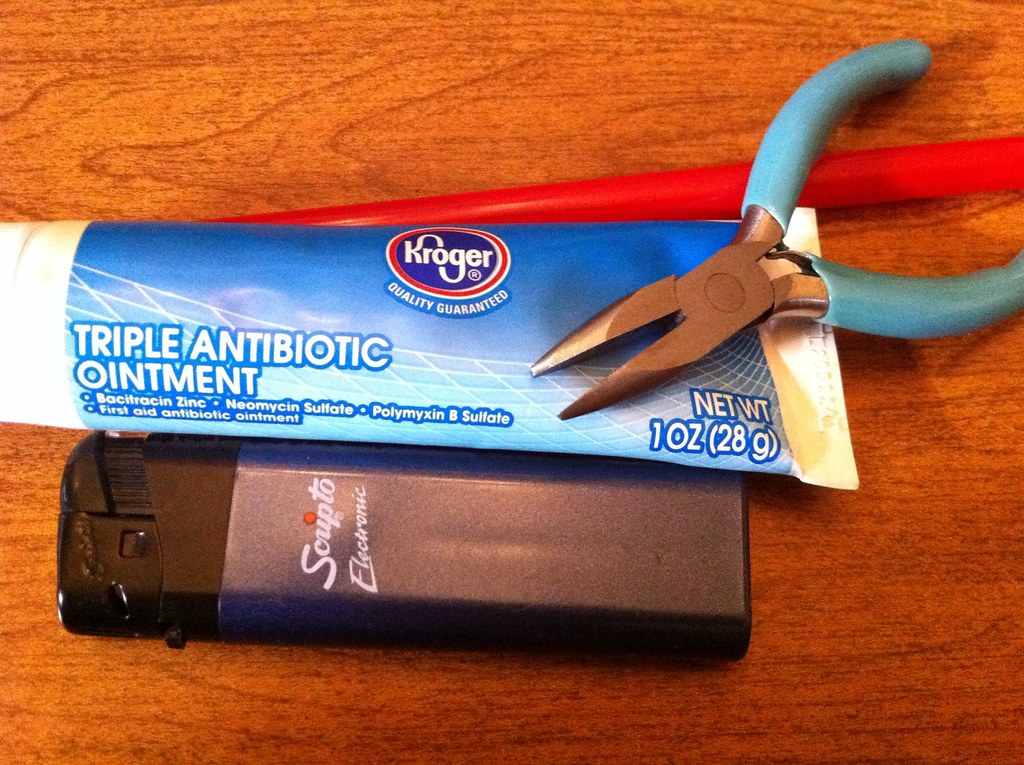
Ointment of choice (I used triple antibiotic ointment)
Plastic Straw (clear works best)
Needle Nose Pliers (if you have two pairs, that's even better, but not necessary)
Lighter

Simple, right?


Instructions:

At one end of the straw, squeeze in a portion of ointment.  You will probably end up wasting a bit, so put a little more than you want in your final tube.  I used a little under an inch's worth of straw length.  This is one way in which a clear straw would make things easier; judging how much ointment you are using.

Carefully pinch down the end of the straw to squish the ointment upwards, until you have enough empty space at the bottom for the width of your pliers plus a few millimeters.

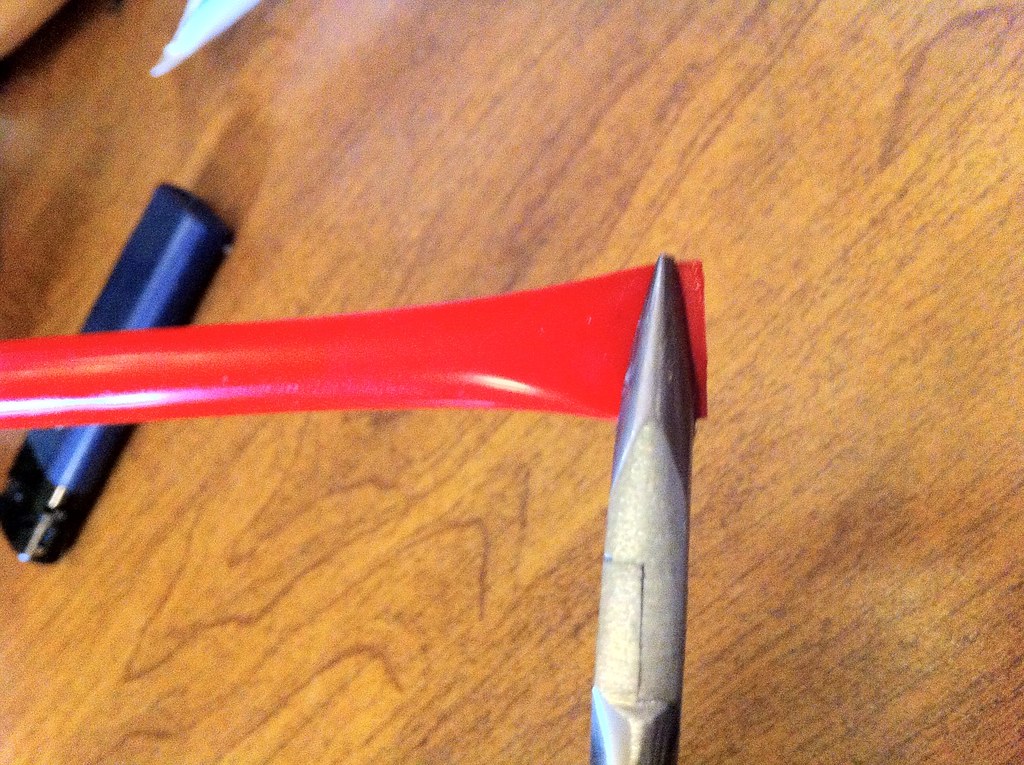
Grip tightly with the pliers with the extra extending past them.  Make sure there is no excess ointment below the pliers, as this will interfere with the sealing process.


Using the lighter, carefully heat the end of the straw extending past the pliers until it melts together.  If you have a second pair of pliers, it can be helpful to pinch the melted strip while still hot to form a better seal.

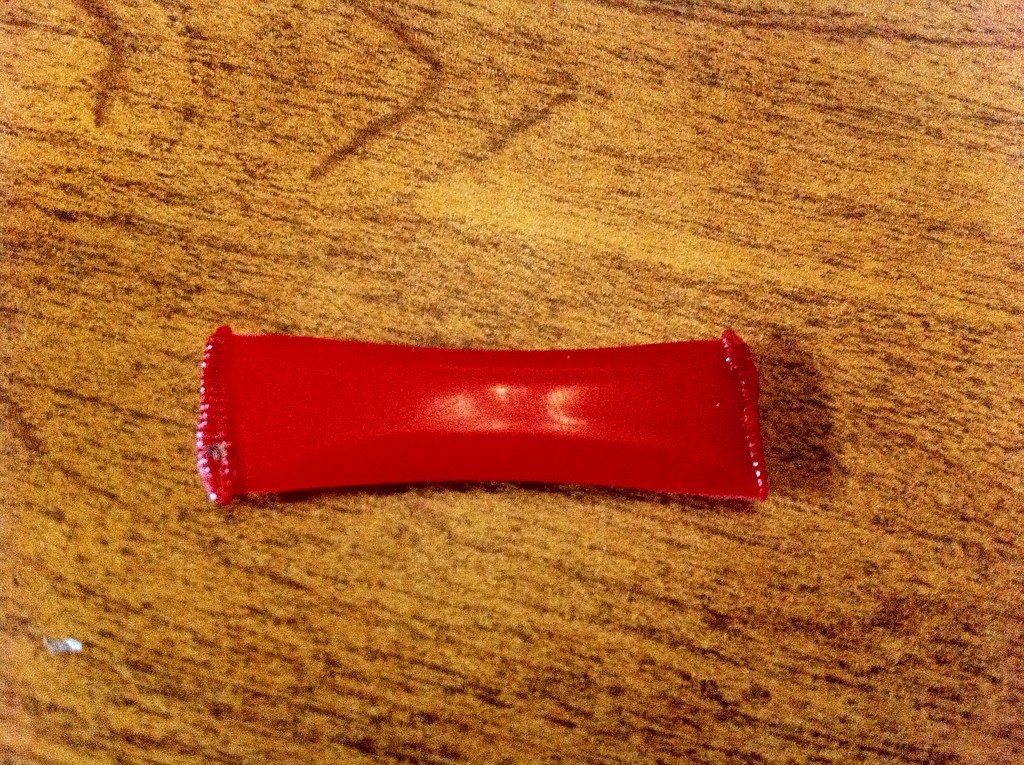
Repeat at other end, either making a 'flat' or 'triangle' tube.  This is the other instance when having a clear straw would make things much easier, as you try to judge where to grip the straw on the other end.


That's it!


I can think of so many uses for these!  Throw a half dozen or so in your first aid kit instead of a full tube, to reduce bulk.  A hiking or car emergency kit.  Keep one or two in your purse or wallet for minor emergencies.  And that's just with the antibiotic ointment!

You can use the same process for sealing honey straws, which makes a fabulous single-serving to add to drinks or just enjoy for a sweet snack.  Single-use packets of lotion.  Bad Hair Day emergency hair gel.  Any fairly thick liquid, ointment, gel, etc. that you use a small portion of at a time is a perfect candidate for this method.  Just remember that if you use this for more than one type of product . . .  write on it what's in the tube!


Sunday, November 4, 2012

How-To: Easy Inexpensive Gift Plates

There are lots of easy, inexpensive treats available to make as Christmas gifts, like Super Simple No Fail Fudge.

However, that leaves the question of how to package your goodies to give them away; if you have to buy a tin or plate for every gift, this is often the most expensive part of the gift.

Not anymore!

This brilliant idea costs pennies, and allows you to adjust for any gift-giving occasion, all with supplies you probably already have in the house.

What You Will Need


1-3 paper plates (you can even get cute ones appropriate to the occasion, or decorate them yourself)
Approx. 2 feet of ribbon
Hole punch or Xacto knife

How To Assemble


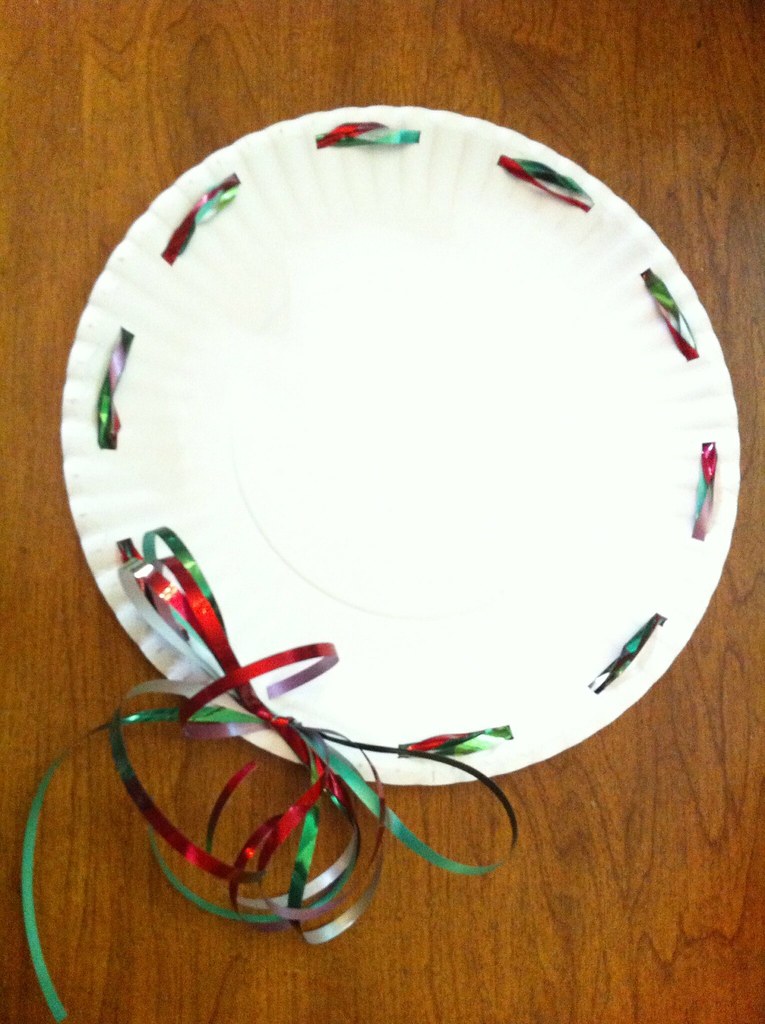
Punch or cut a holes a quarter inch or so from the edge of your plate, about an inch to an inch and a half apart.  On the plate I used, I skipped two 'ripples' in between each hole (the last one was on the next ripple to the first, but that was fine as the bow goes there.)  If you will be heavily loading the plate, use two or even three together and cut through all of them at the same time so that they line up properly.


String your ribbon through the holes, alternating top and bottom.  This will be easier if you pull enough through the first hole to make it all the way around and tie a bow at the end, instead of trying to pull it as you need it.


Tie a pretty bow, cut off excess ribbon, and you're done!  If your gift will need to travel, wrap with cellophane and use the same ribbon to tie it shut.


Friday, November 2, 2012

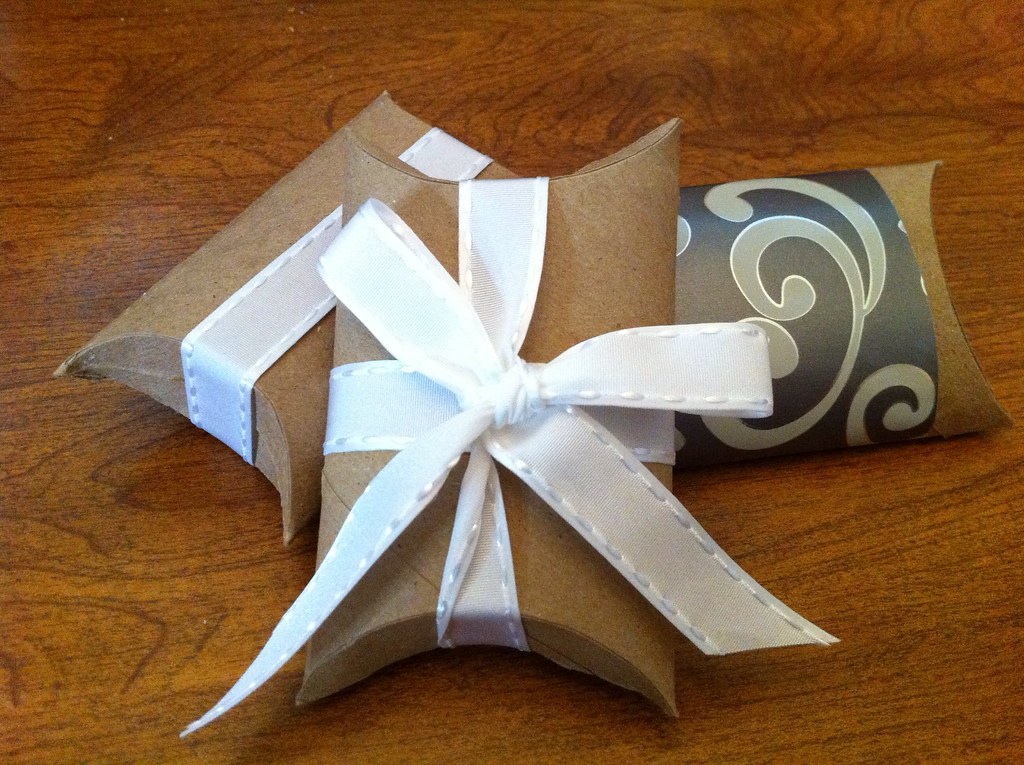
How-To: Upcycled Pillow Boxes


I got the inspiration for these adorable little boxes on, I admit, Pinterest. However, while it said what they were, they included no instructions and it took me a while to figure out exactly how to do it. So, I decided to take the 'figure out' time out of it for future readers.

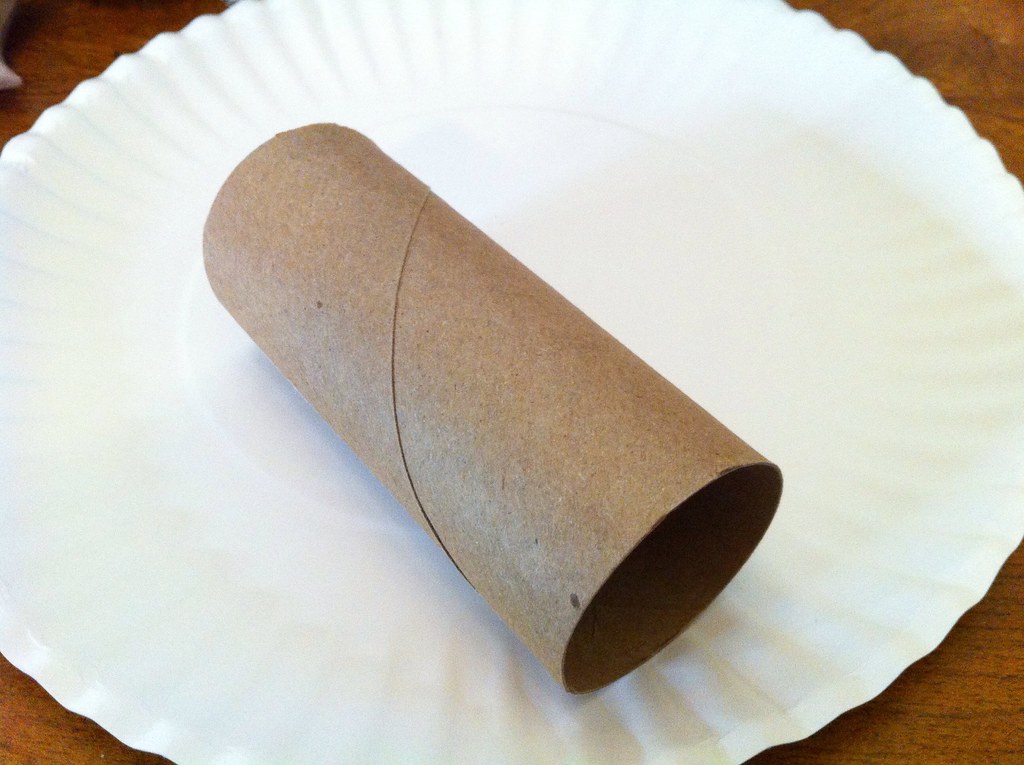
Here, then, is a step-by-step tutorial to go from – yes – toilet paper rolls, upcycled to adorable pillow boxes for small gifts.  You could follow the same basic instructions with paper towel rolls, either for long boxes, or cut into pieces for 'square' boxes, or any size in between.


All you absolutely need is this:


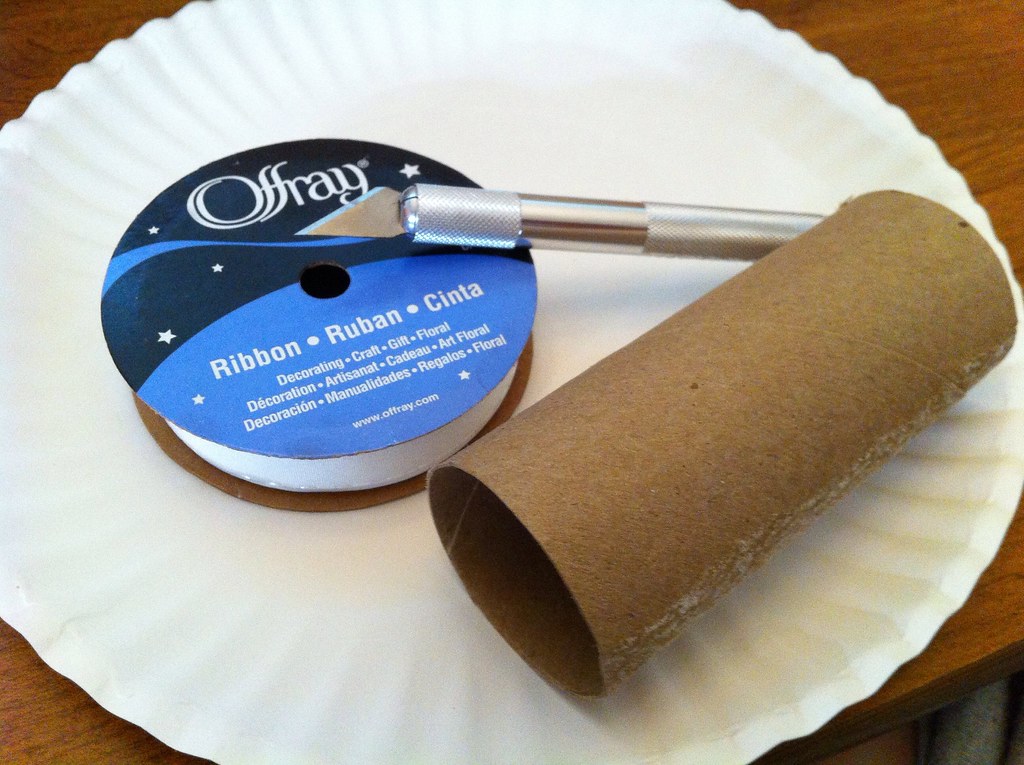
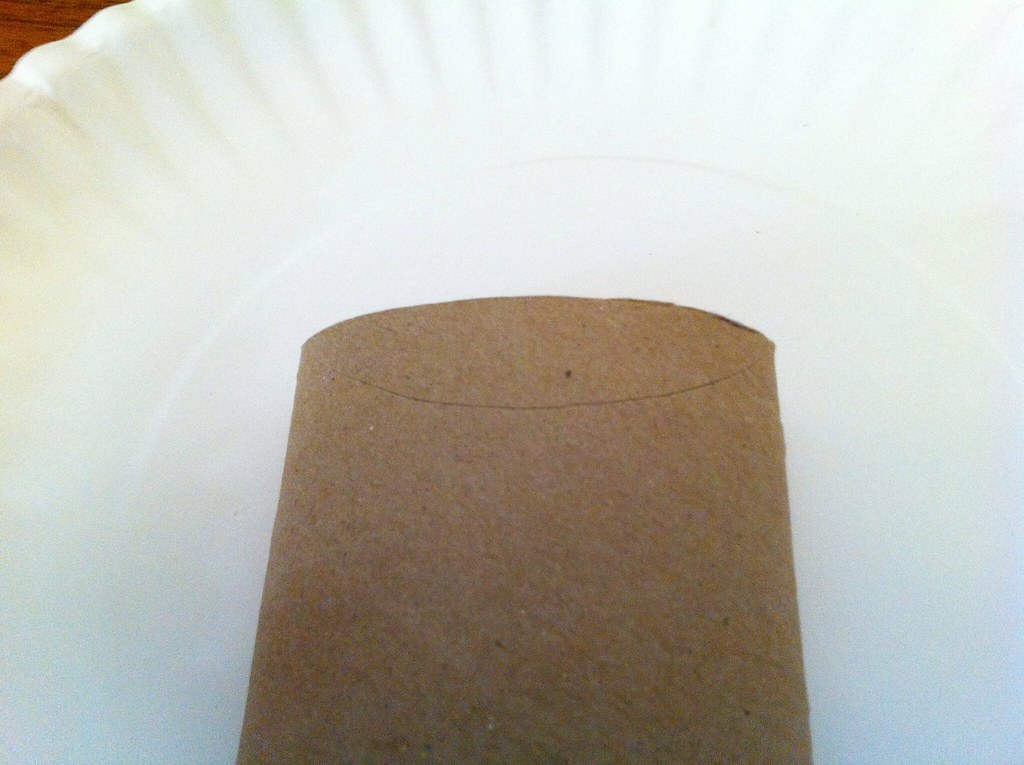
However, I I found it was much easier, and the finished product much neater, to lightly score the tubes with an exacto knife.  After much searching around the house for 'the perfect circle', I found that the spool of ribbon I would be using to decorate the box with when it was finished, was the perfect size.


So, gather your materials.  Easy.

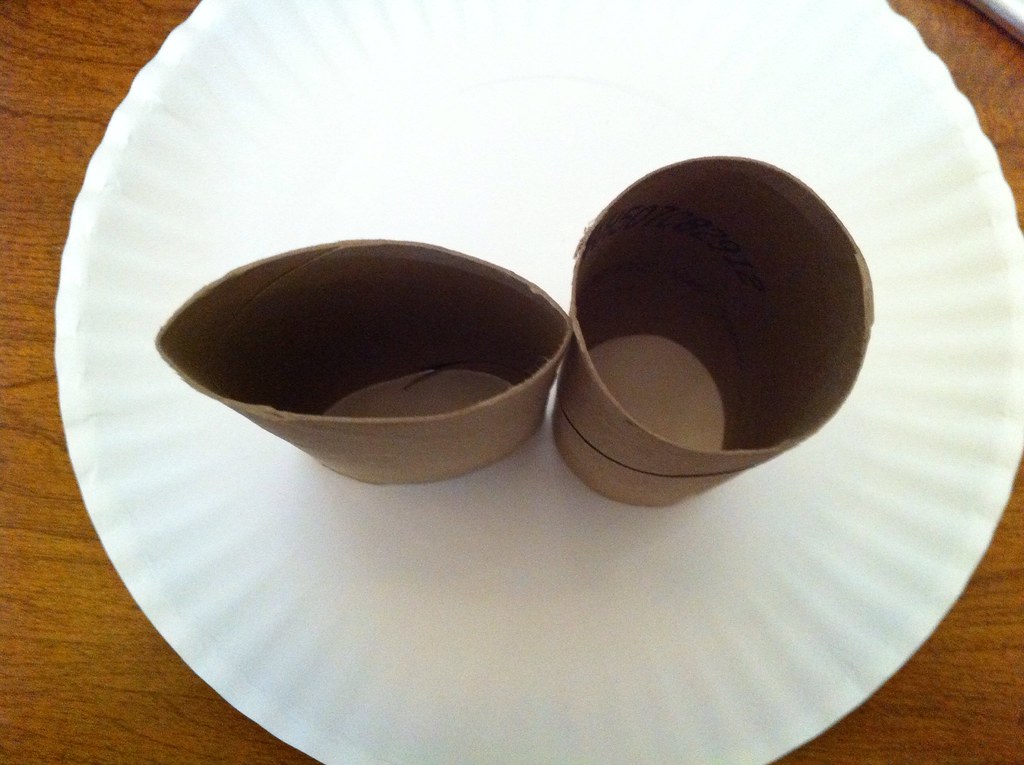
Now, squish your roll flat, but don't hard-crease the edges, so that it will pop back up partway.


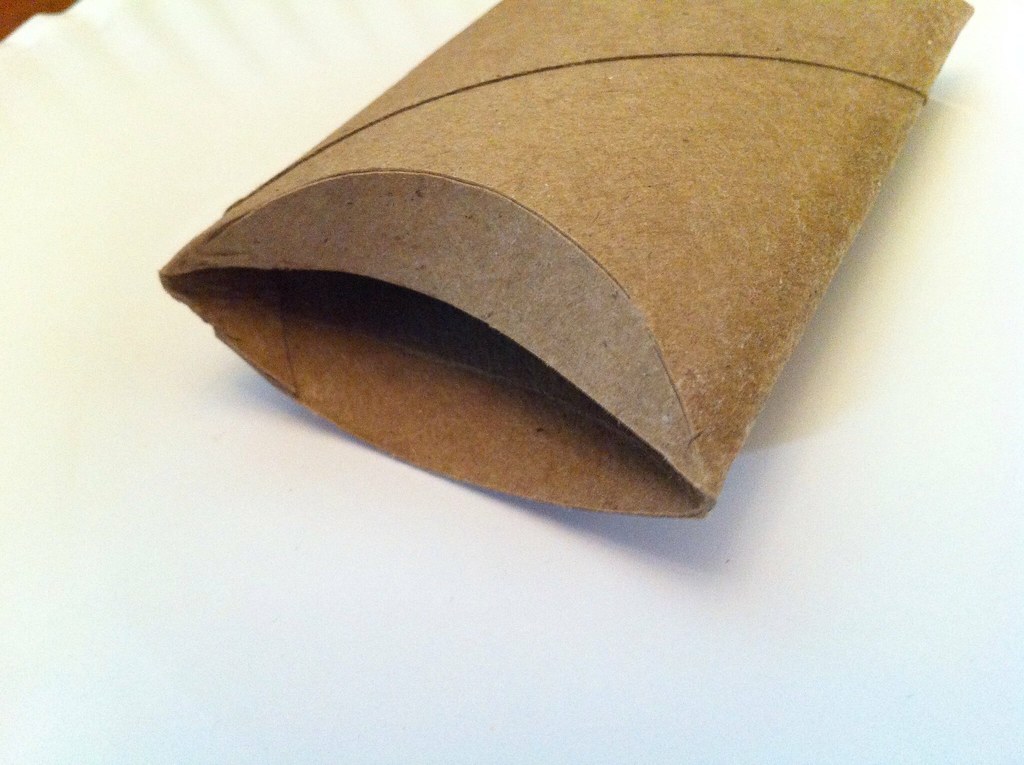
Line your circle guide at one end of the roll, so that it goes from corner to corner with the tube squished.  Lightly score around the circle; keep in mind you aren't trying to cut anything, just make it easier to fold neatly.


Repeat at both ends, front and back.

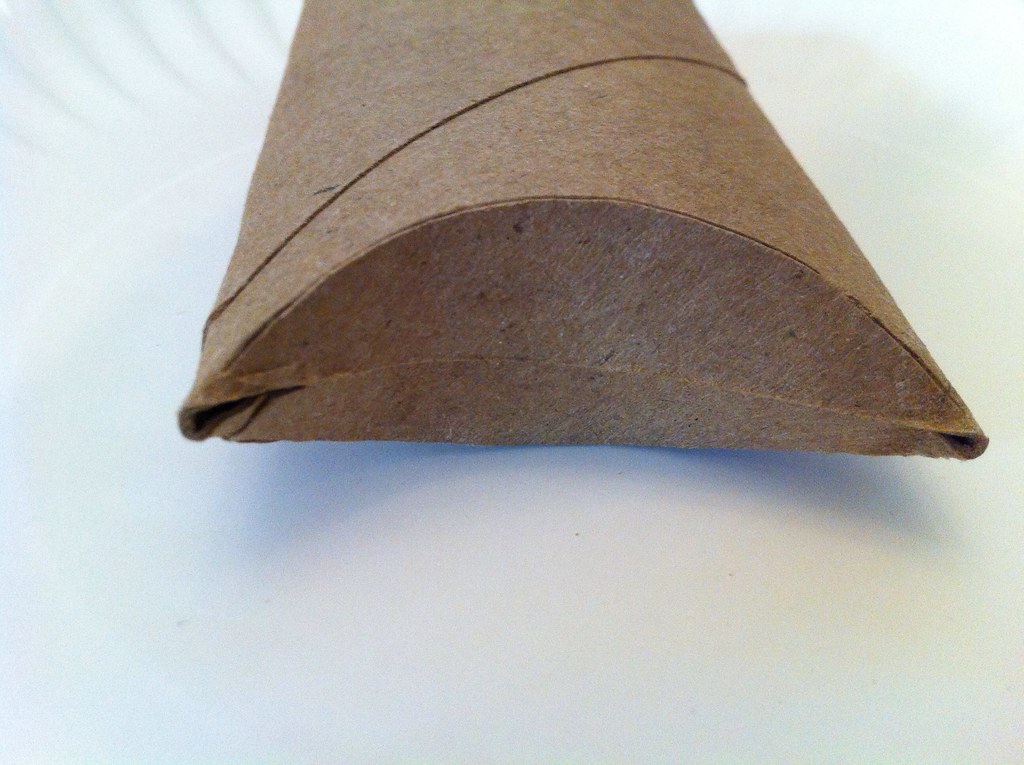
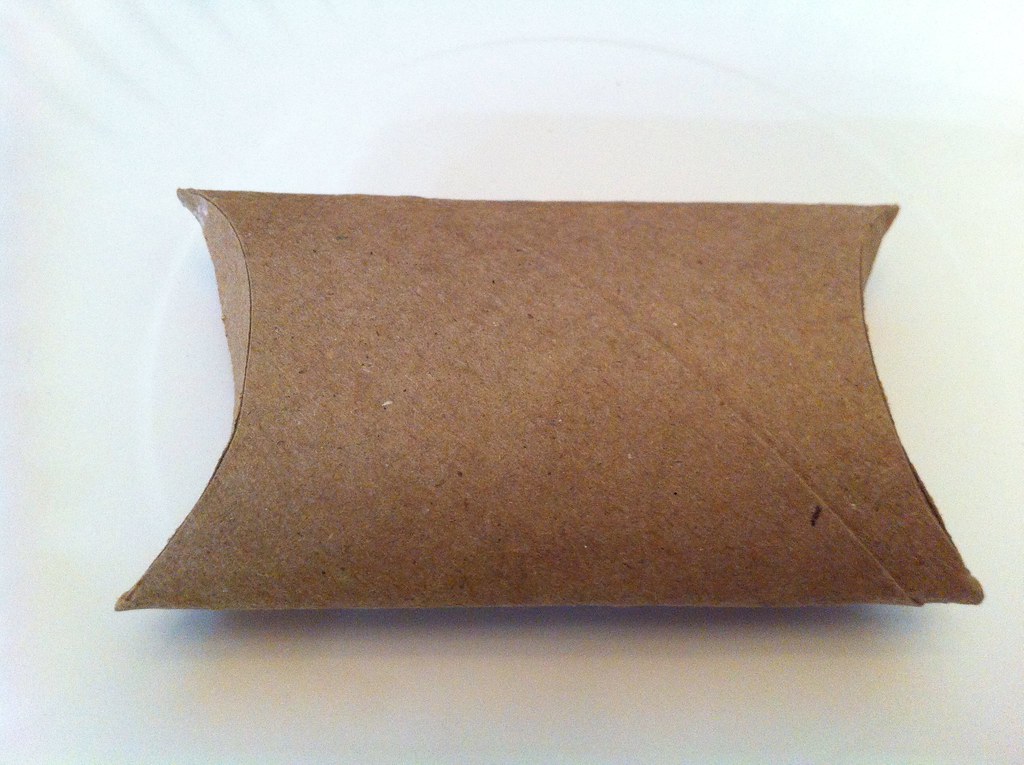
Bet you can't guess the next step, huh?  Oh, wait, right...  So, fold down the flap.  If you have an 'ugly' side to the box, such as a glue strip, fold that side first, so that it will end up the bottom.  Repeat for all four flaps, first 'front' then 'back'.  You may need to squish and wiggle the little pointy corners a bit to get them lined up and shaped just right.


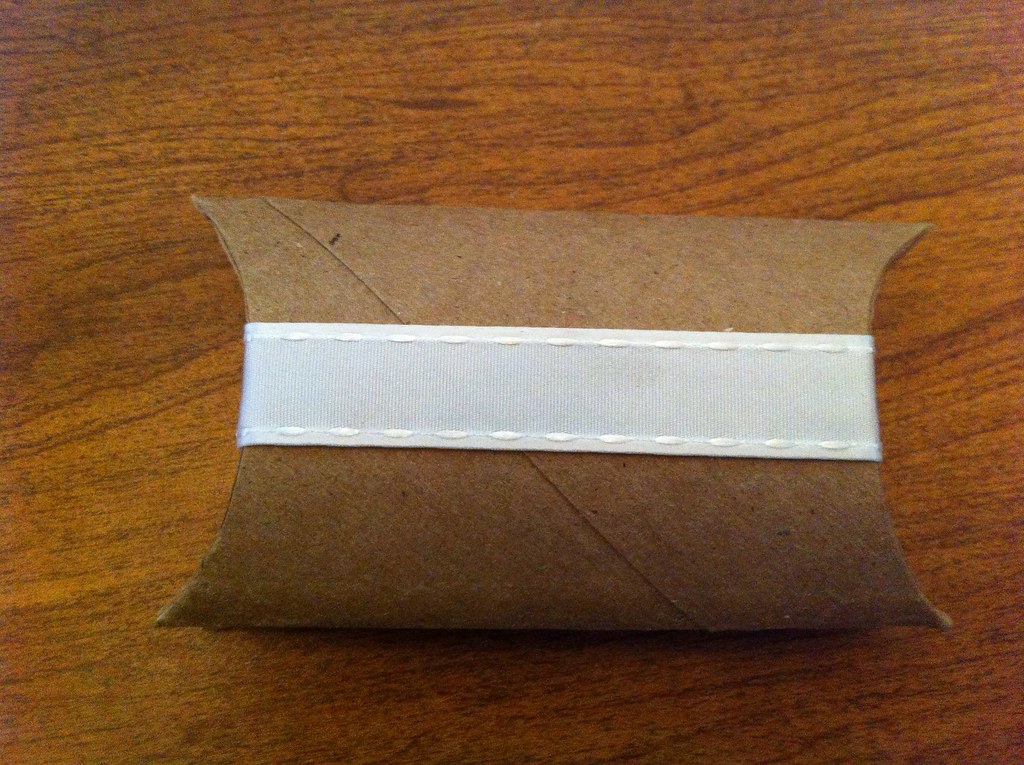
That's it!  That's your basic pillow box.  Decorate them, with markers or stamps or glitter....  wrap them with a little strip of wrapping paper (the huge benefit to this is you can just do it in the center, making the box complete with decoration reusable!), or just some ribbon, or a pretty bow...  get creative!


Saturday, October 27, 2012

How To: Civil War Handkerchief Dolls

My grandmother-in-law gave me one of these adorable little dolls a year or so ago, and this year has asked me to make some of them for her, for Christmas gifts. They are very adorable just on their own, and all the more so because of their fascinating history.

During the Civil War, there was little money to be found for food, let alone toys, so women made dolls for the children out of handkerchiefs. If the handkerchief had belonged to a loved one who had gone off to war, the doll helped to ease the pain of separation.

Also known as church dolls, they provided a quiet toy for a child's amusement, and were silent if dropped.

 Materials:

  • 1 handkerchief or thin napkin 
  • 1 generous handful of stuffing for the head 
  • 1 1/2' of thin satin ribbon (approx.) 
  • 1 paper towel 
  • tape
If you are using an 'old' handkerchief or napkin, be sure to clean them thoroughly and press them first.


Instructions:

Take the stuffing for the head and paper towel.  Roll the stuffing loosely in the paper towel, and tape into a 'tube', then fold down the sides and tape together, then tape down two of the corners a bit, to make a roughly head-shaped ball.  Although this is not strictly necessary, I found it almost impossible to get the head formed right without doing this first.


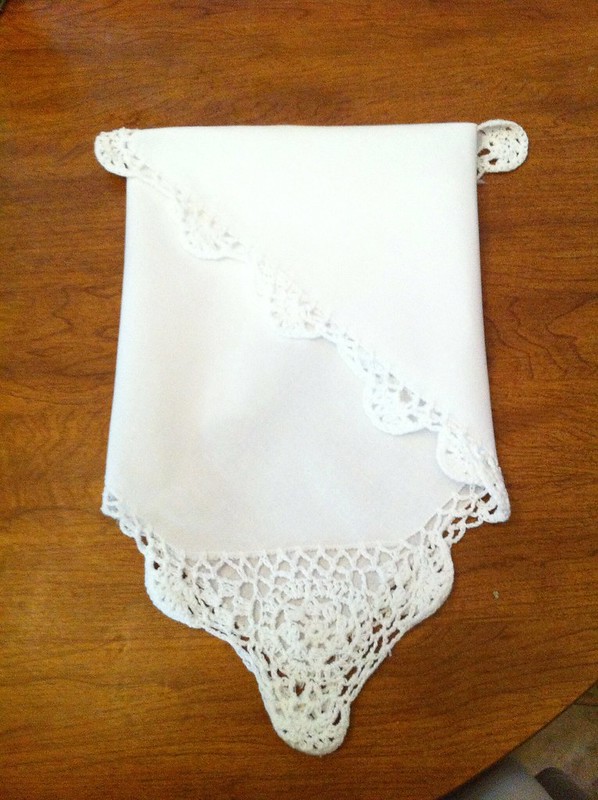
Arrange the ball near the top edge of the handkerchief, so that you can fold the remaining cloth over it completely with a half inch or so extra below the ball, so as to get tied down at the neck.

Carefully wrap the remaining handkerchief down around the ball, tugging gently as necessary to get it even, but do not pull it down too tight.

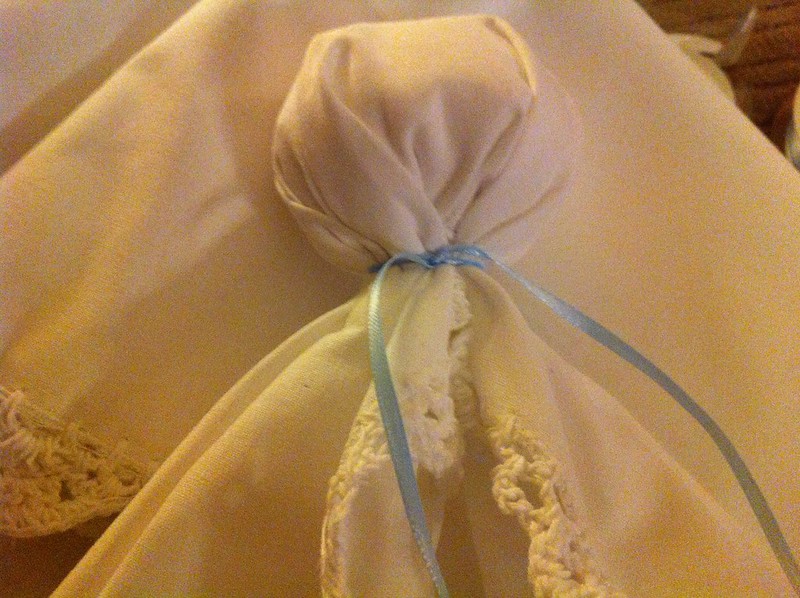
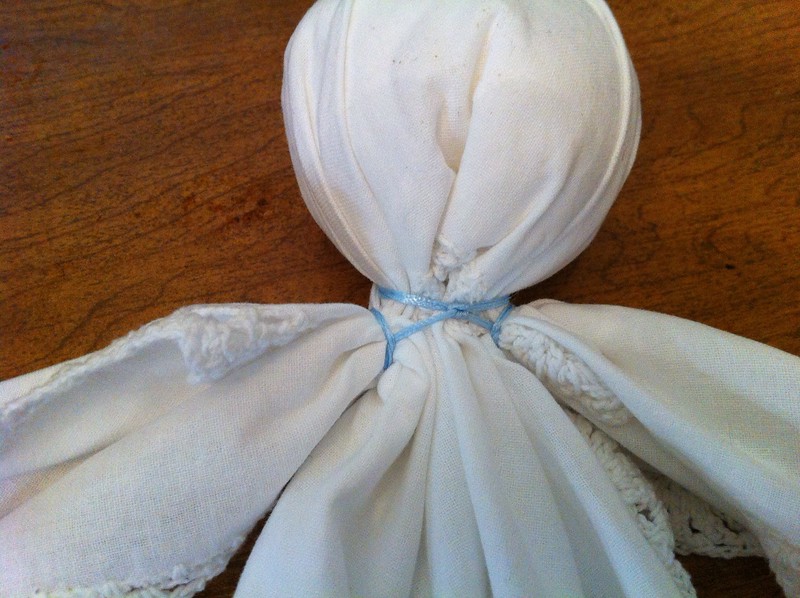
Holding the handkerchief in place with one hand, wrap the ribbon around the 'neck' under the ball carefully, in the middle of the ribbon, and tie securely in place.


Pull the short corners out straight, and tuck in the long side to just under the neck, forming the arm.


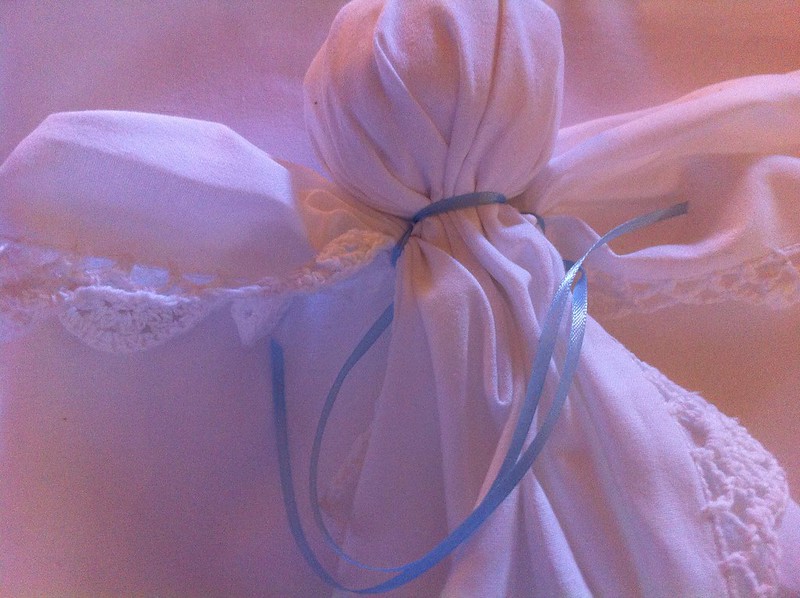
Using one side of the ribbon, wrap it around the arm piece, and tie in the back.  Be sure to snug it down tightly, then repeat on the other side.

Slip ribbons snugly under the arms to the front.


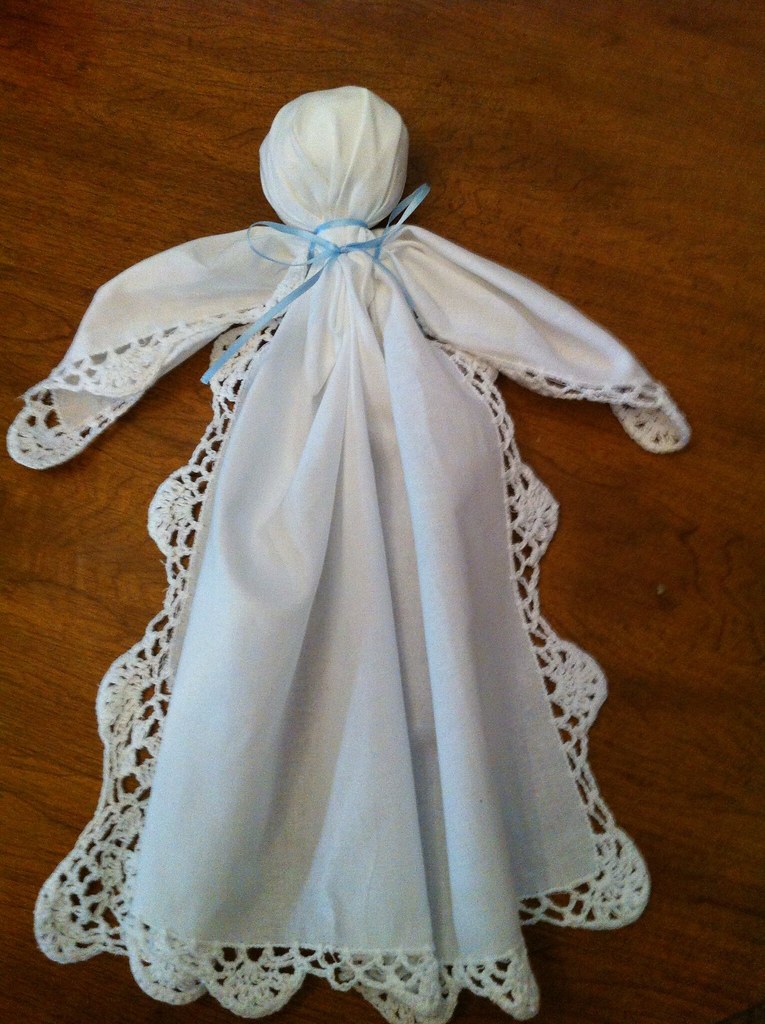
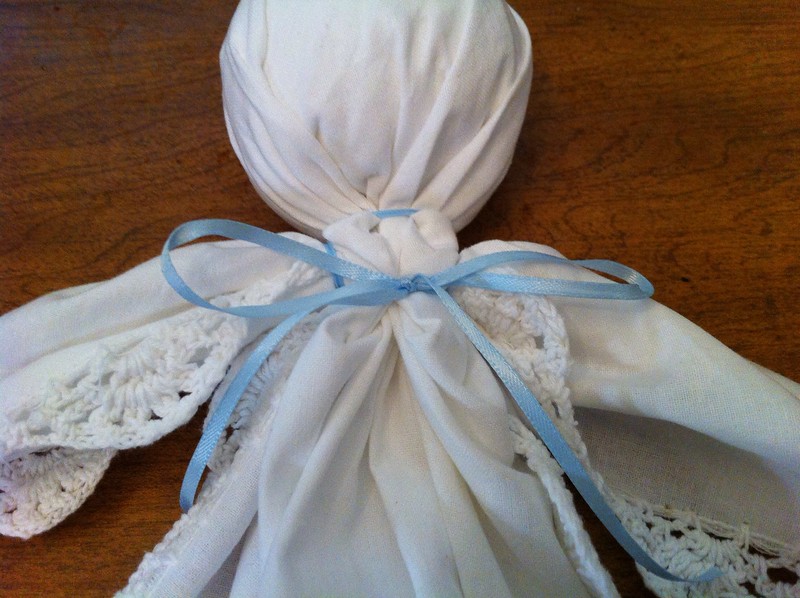
Tie ribbons securely in the front, then in a nice bow.  If necessary (as it is below), carefully tug the handkerchief to lay neatly between the ribbons.  You are finished!


Feel free to print out the card below if giving the doll as a gift, to share the enchanting history of these simple but ingenious dolls.


Thursday, October 25, 2012

Grunge Portrait Addendum

Most of the 'point' of my last post was to share the awesome tutorial by tigers-stock on DeviantArt, then I forgot to include the link!  >.<  I have now fixed that for any future readers, and for those who missed it the first time around that are interested, it can be found here:  Tigers-Stock's Grunge Portrait Tutorial

Hope you enjoy it!

Wednesday, October 24, 2012

Amazed with my own work!

The impetus to finally start this blog – been meaning to for a while but never got around to it – was when I found the most amazing tutorial on making portraits in the "grunge" style.  I got Adobe Photoshop finally, too, just to try it out...  and I am in love.  With photoshop, with my new artwork.  I used to see people talk about taking 20 or more hours to create an image on the computer, and I just couldn't figure it out...  how could you find 20 hours worth of work to do on a computer?  how could you stay interested and not just lose track?  But...  well...  the first one took about 15 hours, and the second, the knight, took about 20-22.

Take a look!  And if either strikes your fancy, they are available on dozens of items over at my Zazzle store.